
AUSTIN’S PREMIER Truck Upgrade Guide.
Talk to an Expert
01
LIFT KITS
More Height. More Capability. A Bolder Truck.
The Short Answer
A suspension lift kit raises your truck to create a taller stance and accommodate certain larger tire configurations. Depending on the system, it can also improve clearance for off-road obstacles. The right lift depends on your vehicle, driving habits, desired height, and tire goals, not simply how tall you want your truck to look.
Key Questions & Answers
What does a lift kit do, and is it right for my truck?
A lift kit raises your truck’s suspension to achieve a taller stance, support certain larger tire setups, and potentially improve off-road clearance. It may be right for you if you want a more aggressive appearance, additional capability, or a combination of both.
What matters: Different suspension systems affect ground clearance, suspension geometry, and everyday drivability differently. The best choice starts with how you actually use your truck.
Should I choose a lift kit or a leveling kit?
Choose a leveling kit primarily to reduce your truck’s factory front-to-rear rake. Consider a full suspension lift when you want a more substantial height increase, different suspension capabilities, or a larger tire setup.
What matters: A leveling kit may be sufficient for appearance-focused upgrades. A full lift involves more components and potentially greater changes to handling, clearance, and installation requirements.
What lift height and tire size will work best for my truck?
The right lift height and tire size depend on your truck’s year, make, model, suspension configuration, wheel specifications, and intended use. A larger lift does not automatically guarantee that a particular tire will fit without rubbing or additional modifications.
What matters: Tire width, wheel offset, steering clearance, and suspension movement must be evaluated together. A daily-driven truck may benefit from a different setup than one built primarily for off-road use.
How much does a lift kit cost installed?
At Trident Motorsports, a 2-inch lift starts at $600 installed (commonly known as a leveling kit), while a 4-inch lift starts at $2,400 and a 6-inch lift starts at $2,700 installed. Final pricing varies by vehicle, suspension components, installation complexity, and applicable fees. Computerized wheel alignment is included with Trident’s complete lift-kit installation.
What matters: These are starting installed prices, not fixed quotes. Trident can evaluate your truck, recommend the appropriate lift height and suspension components, and provide a personalized estimate based on your goals and budget.
Will a lift kit affect ride quality, handling, or reliability?
A lift kit can change how your truck rides, steers, and handles. The results depend on the suspension design, shock selection, lift height, vehicle configuration, and installation quality. Properly addressing suspension geometry and alignment is important, but it does not guarantee factory-identical handling.
What matters: Discuss daily driving, highway use, towing, and off-road priorities before selecting a system. These considerations help determine which compromises are acceptable for your build.
Key Takeaways
- Choose for your driving needs. Appearance, daily comfort, towing, and off-road use can call for different suspension solutions.
- Lift height is only part of the decision. Tire dimensions, wheel offset, and vehicle-specific clearance matter.
- Compare complete installation costs. Suspension components, labor, alignment, and related modifications affect the total.
- Prioritize the complete system. Appropriate components, correct installation, and post-installation checks matter as much as the lift itself.
Decision Guidance
Find the right lift for your truck.
Tell Trident Motorsports what you drive, the stance you want, and how you plan to use your truck. The team can review your goals and help determine an appropriate lift and tire combination.
Talk to an Expert
02
LEVELING KITS
A balanced stance without committing to a full suspension lift.
The Short Answer
A leveling kit raises the front of a truck to reduce its factory nose-down stance, creating a more balanced appearance and potentially providing additional front tire clearance.
Most common truck leveling setups raise the front approximately 1.5 to 2.5 inches, although the appropriate height depends on the vehicle and suspension configuration.
Trident Motorsports installs leveling solutions ranging from front strut spacers to performance-oriented adjustable struts and coilovers. The right choice depends on your truck, desired stance, tire size, ride-quality expectations, and budget.
Key Questions & Answers
What does a leveling kit do, and is it right for my truck?
A leveling kit raises the front suspension to reduce the factory rake—the slightly nose-down stance common on many pickup trucks.
For drivers who want a more balanced appearance without the height of a full suspension lift, leveling can be a practical upgrade.
Depending on the vehicle, a leveling kit may also create additional room for larger front tires.
Common options include front strut spacers, adjustable leveling struts, and performance coilovers. Each approach has different effects on suspension geometry, ride characteristics, and overall cost.
What matters: Choose a leveling kit based on your truck’s actual suspension configuration and intended use—not appearance alone. The correct setup should balance stance, ride quality, tire clearance, and suspension geometry.
Should I choose a leveling kit or a lift kit?
Choose a leveling kit when your primary goal is to reduce the truck’s nose-down stance and achieve a modest increase in front ride height.
Choose a full suspension lift when your goals require a more substantial increase in vehicle height, different suspension components, or greater clearance for a larger wheel-and-tire package.
Leveling kits generally focus on the front suspension. Full suspension lift systems may modify both front and rear suspension height and incorporate additional geometry-correction components.
Neither option is automatically better. The correct choice depends on your vehicle and what you want the finished truck to accomplish.
What matters: Start with your desired stance, tire size, driving conditions, and budget. If a leveling kit can achieve those goals safely, a larger suspension lift may be unnecessary.
What leveling height and tire size will work best for my truck?
Many truck leveling kits provide approximately 1.5 to 2.5 inches of front lift.
That can create additional tire clearance, but the amount varies considerably by vehicle.
Some properly configured trucks can accommodate approximately 33- to 34-inch tires with a leveling kit. Certain applications may support 35-inch tires, depending on wheel offset, tire dimensions, suspension design, and available clearance.
Tire diameter alone does not determine fitment.
Wheel width, offset, tire construction, suspension travel, and steering clearance all influence whether a particular combination will fit without rubbing.
What matters: Confirm the complete wheel-and-tire combination before selecting the leveling height. A setup that fits one truck may require different components or modifications on another.
How much does a leveling kit cost installed?
Leveling-kit installation costs vary based on your truck, the components selected, and the work required.
A basic front spacer installation and a performance leveling system using adjustable struts or coilovers can have substantially different installed prices.
Additional considerations may include suspension geometry corrections, vehicle-specific hardware, and installation complexity.
Trident Motorsports can evaluate your vehicle and recommend a leveling solution that matches your goals and budget.
What matters: Compare complete installed estimates rather than hardware prices alone. Your quote should identify the selected leveling components, installation labor, alignment, and any additional vehicle-specific work.
Will a leveling kit affect ride quality, handling, or suspension reliability?
A properly selected and installed leveling kit can provide a more balanced stance while maintaining suitable everyday driving characteristics.
However, the result depends on the components used and the vehicle’s suspension geometry.
Spacer-based systems primarily change front ride height. Performance-oriented struts and coilovers may also change damping characteristics and ride feel.
Increasing front suspension height can alter control-arm angles, available suspension travel, and alignment settings. Some vehicles may require additional components, such as corrected upper control arms, to maintain appropriate operating geometry.
A leveling kit also does not increase the manufacturer’s rated payload or gross vehicle weight rating.
What matters: Professional installation should include an evaluation of suspension geometry and a computerized wheel alignment. Trident’s documented leveling installation process includes post-installation alignment to help establish appropriate handling and tire-wear characteristics.
Key Takeaways
- A more balanced stance. Leveling kits primarily address the factory nose-down appearance by raising the front suspension.
- Modest height, meaningful difference. Many applications use approximately 1.5 to 2.5 inches of front leveling, depending on the vehicle.
- Tire fitment requires verification. Larger tires may fit, but wheel offset, tire dimensions, steering clearance, and suspension travel must be evaluated together.
- Installation quality matters. Correct component selection, suspension geometry, and computerized alignment are essential considerations for long-term drivability.
Decision Guidance
Not sure which leveling setup is right for your truck?
Tell us what you drive, the stance you want, and whether you’re planning larger wheels or tires. Trident Motorsports can help evaluate the appropriate leveling height, suspension components, and installation requirements for your build.
Talk to an Expert
03
WHEELS & TIRES
The right fit. The right stance. The right performance.
The Short Answer
Upgrading your truck’s wheels and tires can transform its appearance, traction, and driving characteristics—but the right combination involves more than choosing a wheel design and tire size.
Wheel diameter, width, offset, tire dimensions, load capacity, and suspension clearance must work together.
Trident Motorsports helps truck owners select complete wheel-and-tire packages based on their vehicle, preferred stance, driving conditions, and budget.
From everyday highway driving to more demanding off-road use, the goal is a properly matched setup that looks right and performs as intended.
Key Questions & Answers
What wheels and tires are best for my truck?
The best wheel-and-tire combination depends on how you drive, the appearance you want, and your truck’s specifications.
All-terrain tires are a popular choice for drivers who want a balance of highway comfort and off-road traction. Rugged-terrain tires offer a more aggressive appearance and tread design, while mud-terrain tires prioritize traction in challenging off-road conditions.
Wheel selection also matters. Diameter, width, construction, and offset influence appearance, tire compatibility, and driving characteristics.
Trident works with wheel and tire brands including Fuel, Method, Vossen, Nitto, and Toyo to help customers evaluate suitable combinations.
What matters: Start with your driving needs and vehicle requirements before choosing a wheel design. The right package should balance appearance, traction, comfort, load capacity, and fitment.
What size wheels and tires will fit my truck without rubbing?
Tire fitment depends on more than tire diameter.
Your truck’s suspension height, wheel width, wheel offset, tire dimensions, and available clearance all influence whether a particular combination will fit.
Larger tires may require a leveling kit, suspension lift, different wheel specifications, or vehicle-specific clearance modifications.
Even trucks of the same model can have different fitment requirements depending on trim level, suspension configuration, and installed accessories.
A tire that clears while driving straight may still contact suspension or body components during steering or suspension movement.
What matters: Verify the complete wheel-and-tire package before purchasing. Proper fitment should account for steering clearance, suspension travel, and the vehicle’s intended use—not just how the tires look when parked.
What is wheel offset, and how does it affect my truck’s stance?
Wheel offset determines where the wheel sits relative to its mounting surface.
A positive offset generally positions the wheel farther inward, while a lower or negative offset moves it farther outward.
Changing offset can create a wider, more aggressive stance, but it also changes the relationship between the tire, suspension, fender, and steering components.
An aggressive offset may increase the likelihood of tire rubbing and can affect steering feel and mechanical loading.
Backspacing, wheel width, and tire dimensions must also be considered.
What matters: Choose wheel offset for your specific truck and tire combination. The most aggressive stance is not necessarily the best fitment or driving solution.
How much does a custom wheel-and-tire package cost?
Custom wheel-and-tire package pricing depends on the wheels, tires, and installation services selected.
Wheel construction—including cast, flow-formed, and forged designs—can significantly influence cost.
Tire brand, size, load rating, and tread category also affect the total investment.
A complete installed package may include mounting, balancing, tire-pressure monitoring system compatibility, and vehicle-specific hardware.
Trident Motorsports can help evaluate suitable options and prepare a package recommendation based on your truck, desired appearance, driving needs, and budget.
What matters: Compare complete installed packages rather than wheel or tire prices alone. Confirm the selected components, fitment requirements, mounting, balancing, TPMS compatibility, and any additional hardware before making a decision.
Why do professional mounting, balancing, and installation matter?
Even properly selected wheels and tires can produce an unsatisfactory driving experience if installation is not performed correctly.
Professional installation includes appropriate mounting procedures, wheel balancing, correct hardware, and verification of tire-pressure monitoring system compatibility.
Touchless mounting equipment can help reduce the risk of cosmetic damage to wheel finishes.
Road-force balancing evaluates how the tire-and-wheel assembly behaves under simulated load and can help identify conditions associated with vibration.
Proper lug-nut torque and a follow-up torque check are also important after installing aftermarket wheels.
Trident’s documented installation process includes touchless mounting, road-force balancing, TPMS services, and a complimentary 50-mile wheel re-torque.
What matters: Installation quality is part of the wheel-and-tire investment. Correct mounting, balancing, hardware, and post-installation checks help protect both driving performance and long-term reliability.
Key Takeaways
- Fitment comes first. Wheel diameter, width, offset, tire size, and suspension clearance must work together.
- Choose tires for how you drive. All-terrain, rugged-terrain, and mud-terrain options offer different balances of comfort, appearance, and traction.
- Offset changes more than appearance. Wheel offset influences stance, steering clearance, and suspension relationships.
- Installation completes the package. Professional mounting, balancing, TPMS compatibility, and proper wheel torque are essential parts of a successful upgrade.
Decision Guidance
Not sure which wheels and tires will fit your truck?
Tell us what you drive, the stance you want, and how you use your truck. Trident Motorsports can help evaluate wheel styles, tire options, fitment requirements, and complete installed packages that match your goals.
Talk to an Expert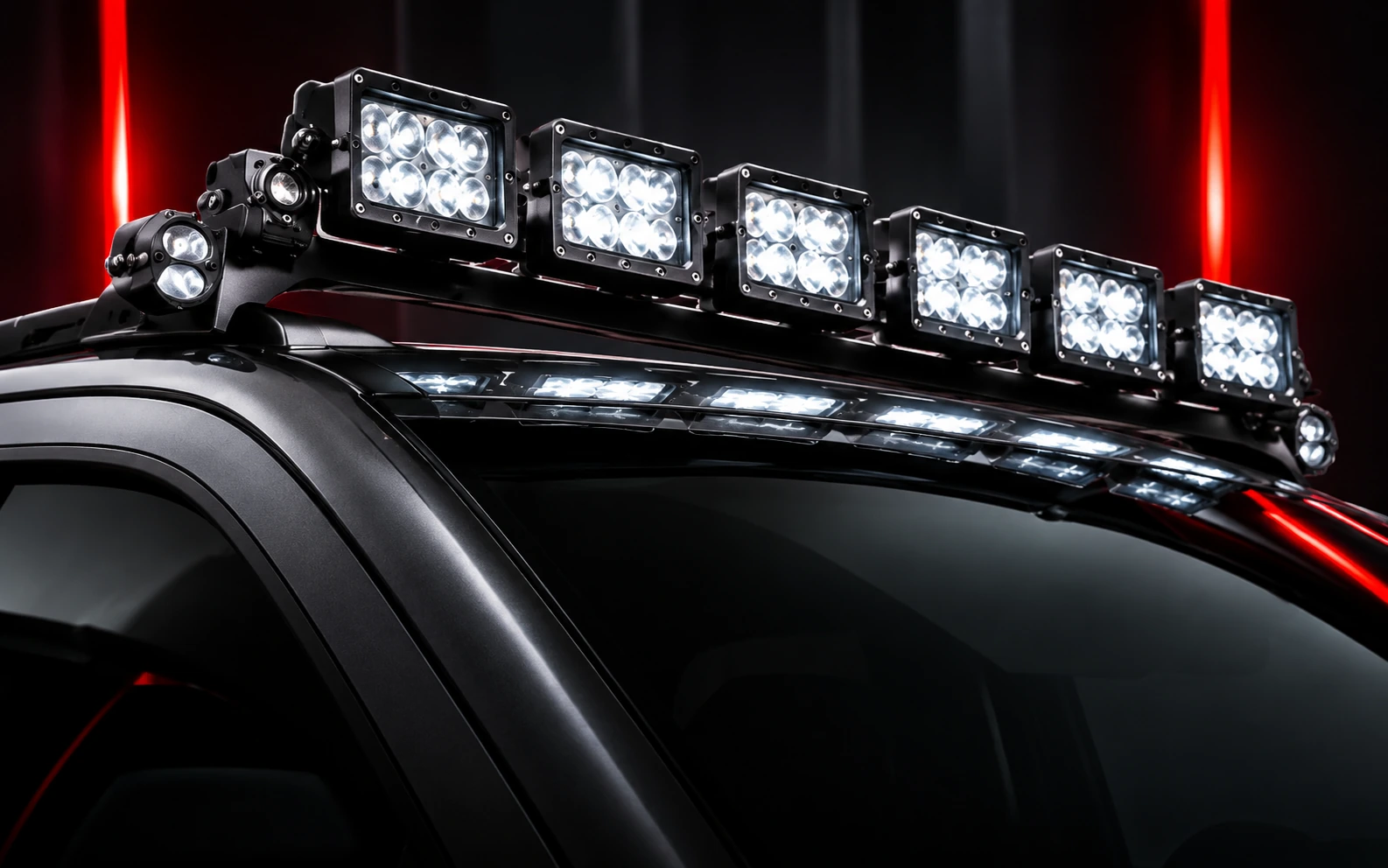
04
TRUCK ACCESSORIES
More protection. Better access. Greater capability.
The Short Answer
Truck accessories can improve your vehicle’s protection, accessibility, functionality, and appearance.
From heavy-duty bumpers and grille guards to side steps, power running boards, rock sliders, and auxiliary lighting, the right upgrades depend on how you use your truck.
Some accessories are designed for everyday convenience. Others provide additional protection or support more demanding work and off-road activities.
Trident Motorsports helps truck owners select compatible accessories and installation solutions that match their vehicle, driving needs, and intended use.
Key Questions & Answers
Which truck accessories are worth upgrading first?
The most useful truck accessories are the ones that solve a specific problem or improve how you use your vehicle.
For everyday convenience, side steps and running boards can make entering and exiting a lifted or full-size truck easier.
For added protection, heavy-duty bumpers, grille guards, and appropriately designed armor may help protect vulnerable vehicle components.
Auxiliary lighting can support visibility in suitable off-road or work environments, while towing accessories can expand a truck’s practical utility when properly matched to its rated capabilities.
The right priorities depend on whether your truck is primarily used for commuting, work, towing, recreation, or off-road driving.
What matters: Start with the function you need most. Prioritize compatible accessories that provide a meaningful benefit rather than adding equipment solely for appearance.
What is the difference between heavy-duty bumpers, grille guards, and off-road armor?
Heavy-duty bumpers, grille guards, and off-road armor serve different purposes.
A heavy-duty replacement bumper may provide a stronger mounting platform for certain accessories, such as winches or auxiliary lighting, while changing the truck’s front or rear protection profile.
Grille guards are designed to provide additional coverage around portions of the vehicle’s front end.
High-clearance off-road bumpers emphasize approach angles and clearance around obstacles, while skid plates and other protective components can help shield vulnerable areas underneath the vehicle.
The correct equipment depends on your truck’s design and intended use.
Added weight, mounting requirements, recovery-point ratings, and compatibility with factory sensors must also be evaluated.
What matters: Choose protection based on actual driving conditions. A heavy-duty bumper, grille guard, and high-clearance off-road bumper are not interchangeable solutions.
Should I choose fixed side steps, power running boards, or rock sliders?
Fixed side steps and running boards provide a consistent stepping surface for easier vehicle entry and exit.
Power running boards deploy when needed and retract when not in use, offering convenient access with a less prominent appearance when stowed.
Rock sliders are designed primarily to protect the vehicle’s lower body during certain off-road conditions. Some designs can also function as steps, but protection and accessibility are not always equivalent.
Your truck’s ride height, passenger needs, ground clearance, intended terrain, and mounting configuration should guide the decision.
Powered systems also require appropriate electrical integration.
What matters: Choose side steps for accessibility, power running boards for retractable convenience, or properly rated rock sliders when off-road body protection is the priority.
Will aftermarket bumpers and accessories work with my truck’s factory sensors and electronics?
Many modern trucks include parking sensors, cameras, radar systems, and driver-assistance features that may be affected by aftermarket equipment.
Replacement bumpers, grille guards, lighting systems, and other accessories must be evaluated for compatibility with these factory components.
Some products offer vehicle-specific mounting provisions or sensor relocation solutions.
However, the presence of mounting brackets does not automatically guarantee that every factory feature will operate as originally intended.
Certain modifications may require additional installation procedures, calibration, or compatibility verification.
Auxiliary lighting and powered accessories also require appropriate electrical connections, circuit protection, and control integration.
What matters: Confirm compatibility before installation. Factory sensor operation, electrical requirements, mounting hardware, and any necessary calibration should be evaluated for the specific vehicle and accessory combination.
How much does professional truck accessory installation cost?
Truck accessory installation costs vary according to the equipment selected, vehicle compatibility, and installation complexity.
A straightforward fixed-step installation generally involves different labor requirements than a powered running-board system.
Likewise, installing a replacement bumper with factory sensor integration, auxiliary lighting, or winch provisions can require more extensive work than installing a basic accessory.
Additional costs may involve vehicle-specific mounting hardware, electrical wiring, sensor-related work, or suspension considerations when heavy equipment is added.
Trident Motorsports can evaluate your truck and recommend compatible accessory options based on your needs and budget.
What matters: Compare complete installed estimates rather than accessory prices alone. Confirm the equipment, mounting requirements, labor, wiring, and any vehicle-specific integration work before approving the installation.
Key Takeaways
- Upgrade with a purpose. Choose accessories that improve protection, accessibility, utility, or driving convenience.
- Protection requires proper fitment. Bumpers, grille guards, and armor must be compatible with the vehicle’s structure, weight requirements, and factory equipment.
- Side steps serve different needs. Fixed steps, powered running boards, and rock sliders offer different combinations of accessibility, appearance, and protection.
- Installation is part of the upgrade. Correct mounting, electrical integration, sensor compatibility, and hardware verification are essential considerations.
Decision Guidance
Not sure which accessories are right for your truck?
Tell us what you drive, the stance you want, and how you use your truck. Trident Motorsports can help evaluate compatible bumpers, armor, side steps, running boards, and other accessories to develop a practical upgrade plan for your vehicle.
Talk to an Expert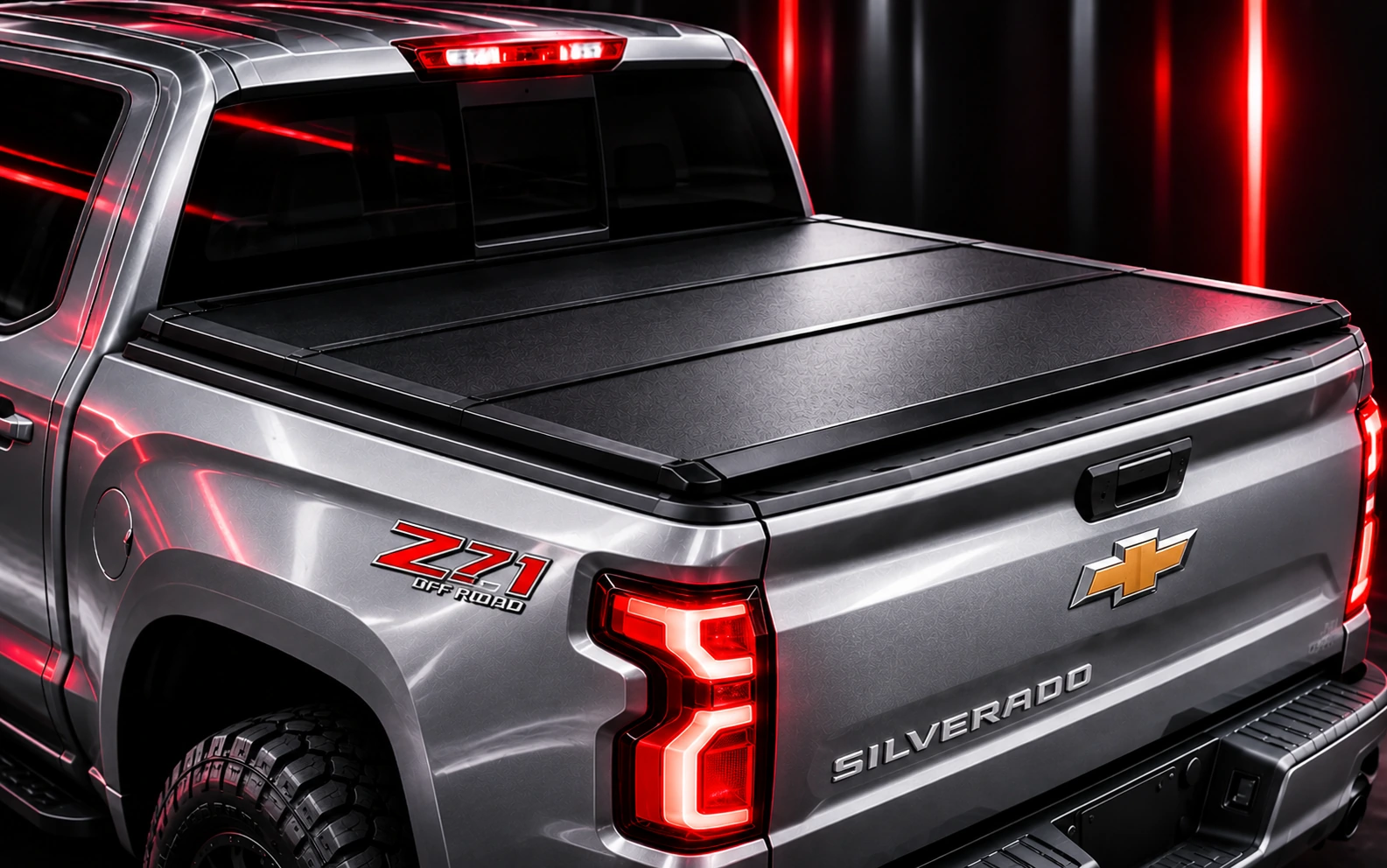
05
BED COVERS & TRUCK CAPS
Protect your cargo. Expand your storage. Find the right fit.
The Short Answer
Bed covers and truck caps help protect cargo, improve truck-bed organization, and make your pickup more useful for everyday driving, work, and recreation.
The right solution depends on how you use your truck.
Hard-folding and retractable bed covers offer convenient access while maintaining a relatively low-profile appearance. Soft roll-up covers provide another practical option.
Truck caps create an enclosed cargo area above the bed rails, offering additional storage volume and protection for equipment.
Trident Motorsports helps truck owners compare bed covers, truck caps, and compatible storage solutions based on their vehicle, cargo requirements, preferred appearance, and budget.
Key Questions & Answers
What bed covers and truck caps does Trident Motorsports offer?
Trident Motorsports provides professional sourcing and installation of truck-bed protection and storage solutions.
Options documented in Trident’s service records include hard-folding tonneau covers, retractable bed covers, soft roll-up covers, modular truck caps, and selected bed-storage systems.
Hard-folding covers provide a durable, low-profile solution with convenient bed access.
Retractable covers slide into a front-mounted housing, allowing the opening to be adjusted for different cargo needs.
Soft roll-up covers offer a simpler approach to bed coverage.
Truck caps create an enclosed cargo area that can accommodate equipment and storage configurations requiring more vertical space.
What matters: Start with what you need to carry and how frequently you access your truck bed. The best solution should match your cargo, security expectations, preferred appearance, and everyday use.
Should I choose a hard-folding, retractable, or roll-up bed cover?
Each cover style offers a different balance of convenience, security, appearance, and cost.
Hard-folding covers use multiple rigid panels that fold toward the cab. They are a strong option for owners who want a low-profile design and convenient access to the bed.
Retractable covers slide along side rails and retract into a housing near the front of the bed. Some systems can be secured in multiple positions and may support compatible rack accessories.
Soft roll-up covers use flexible material that rolls toward the cab. They can provide a straightforward way to cover cargo while maintaining a relatively simple operating mechanism.
A retractable cover’s housing occupies some bed space, while folding panels can affect rearward visibility when fully opened, depending on the design.
What matters: Compare how each cover opens, how much bed access it provides, its security features, and whether it works with your existing or planned accessories.
Should I choose a bed cover or a truck cap?
A bed cover is generally the better choice when you want to protect cargo while maintaining a low-profile truck-bed appearance.
A truck cap is worth considering when you need enclosed storage space above the bed rails.
Bed covers are commonly selected for everyday cargo protection, convenient access, and a streamlined appearance.
Truck caps can be useful for transporting tools, equipment, recreational gear, and other items that benefit from additional enclosed height.
However, truck caps also change the truck’s appearance, add weight, and can affect access to the cargo area.
Some owners may also want to combine a bed cover with compatible storage drawers or rack systems.
What matters: Choose based on the size, shape, and accessibility requirements of your cargo. If you regularly carry taller equipment, a truck cap may be more practical than a conventional tonneau cover.
Can I get a bed cover or truck cap that matches my truck?
Bed covers and truck caps are available in different materials, finishes, and designs.
Many bed covers use black or dark finishes that complement a wide range of truck colors and trim packages.
Truck caps may be available in different exterior finishes, depending on the manufacturer and product line.
Vehicle-specific color-matched options depend on the cap manufacturer, available finishes, and whether the product can be supplied or professionally finished for your truck.
Trident can evaluate available options for your vehicle and help determine which appearance and fitment choices are practical.
What matters: Confirm the specific product, finish, and vehicle compatibility before ordering. A color-matched appearance should not be assumed available for every truck or cap model.
Are bed covers waterproof, and will they keep my cargo secure?
A quality bed cover can provide meaningful protection from rain, road debris, and casual access to the truck bed.
However, most tonneau covers should be considered water-resistant rather than completely waterproof.
Weather protection depends on the cover design, perimeter seals, drainage system, installation quality, and condition of the truck bed.
Hard-folding and retractable covers may offer stronger physical barriers than many soft covers, but security varies by product.
Some covers work with the truck’s locking tailgate to restrict access to the bed.
No cover should be assumed to provide absolute protection against water intrusion or theft.
What matters: Choose a cover based on realistic weather-protection and security expectations. Proper installation, seal positioning, drainage, and tailgate compatibility are important.
How much does a bed cover or truck cap cost installed?
Installed pricing depends on the product type, manufacturer, vehicle fitment, and installation requirements.
Soft roll-up covers, hard-folding systems, retractable covers, and truck caps have different component and installation costs.
Additional considerations may include powered operation, drainage systems, compatible cargo racks, storage accessories, and vehicle-specific mounting hardware.
Truck caps may also require additional fitting, mounting, or accessory integration.
Trident Motorsports can help compare suitable options and prepare an installation estimate based on your truck and intended use.
What matters: Compare complete installed solutions rather than product prices alone. Confirm the cover or cap, mounting hardware, installation labor, drainage requirements, and any additional accessories before making a decision.
Key Takeaways
- Choose around your cargo. The right bed cover or truck cap depends on what you carry and how you access your truck bed.
- Cover styles serve different needs. Hard-folding, retractable, and roll-up systems offer different combinations of convenience, security, and bed access.
- Fitment and weather protection matter. Truck model, bed length, mounting requirements, seals, and drainage affect performance.
- Truck caps expand storage possibilities. An enclosed cap can provide additional cargo height, but product availability, appearance, and compatibility should be confirmed.
Decision Guidance
Not sure which bed cover or truck cap is right for your truck?
Tell us what you drive, what you carry, and whether you prefer a low-profile bed cover or an enclosed truck cap. Trident Motorsports can help evaluate compatible options, available finishes, storage requirements, and professional installation solutions for your vehicle.
Talk to an Expert
06
CUSTOM BUILDS
Your vision. Our expertise. One badass rig.
The Short Answer
A custom truck build doesn’t have to mean a six-figure show truck or a complete transformation.
A custom build starts with your vision.
It might be a leveling kit paired with the right wheels and tires, a suspension upgrade with carefully selected accessories, or a complete truck transformation.
What makes it custom is that the upgrades are selected to work together and reflect your truck, your preferences, how you drive, and what you want to accomplish.
Trident Motorsports helps bring those decisions together into a personalized build plan—whether you’re starting with one upgrade or planning something much bigger.
Key Questions & Answers
What makes a truck build custom?
A custom build is a truck configured around its owner’s specific goals rather than a predetermined package.
It doesn’t have to involve extensive modifications or a large budget.
A leveling kit, wheels, and tires selected to achieve a particular stance can be a custom build.
So can a combination of suspension upgrades, side steps, lighting, bumpers, and other accessories.
Some customers want a cleaner everyday truck. Others want improved off-road capability, work functionality, or a complete visual transformation.
What matters: Custom doesn’t describe how much money you spend. It describes how the upgrades are selected and brought together around your vision.
Can Trident help me choose upgrades that work together?
Yes. Trident Motorsports helps customers evaluate upgrades as a coordinated package rather than a collection of unrelated parts.
For example, your desired tire size can influence the appropriate leveling kit or suspension lift.
Wheel offset affects tire clearance and stance.
Heavy-duty bumpers may introduce additional weight and suspension considerations.
Side steps, lighting, and other accessories should also be selected for vehicle compatibility and intended use.
Planning these decisions together can help avoid conflicting components, unnecessary purchases, and modifications that don’t achieve the desired result.
What matters: Start with the finished result you want. Trident can help determine which components make sense together for your truck.
Do I need a big budget to start a custom truck build?
No. A custom build can begin with a single upgrade or a carefully selected combination of components.
You might start with a leveling kit and wheels, add a bed cover and side steps, or focus on accessories that improve everyday functionality.
Larger builds involving suspension systems, extensive accessories, and specialized components naturally require a different investment.
The important decision is identifying your priorities and establishing a realistic budget before selecting equipment.
Trident can help evaluate options that align with your goals and prepare an estimate based on the specific work involved.
What matters: You don’t need to build everything at once. A well-planned smaller build can deliver the appearance and functionality you want without unnecessary upgrades.
Can I build my truck in stages instead of doing everything at once?
Yes. Many truck upgrades can be planned as a series of projects rather than one complete installation.
For example, you might begin with suspension and wheels, then add side steps, lighting, or bed protection later.
The key is planning future upgrades before making decisions that could limit your options.
If larger tires are part of your long-term goal, that may influence your initial suspension and wheel choices.
Likewise, future bumpers, lighting, or storage accessories may affect component compatibility and installation planning.
What matters: A phased build works best when each upgrade supports the long-term plan. Coordinating the sequence can help reduce unnecessary component changes and repeated labor.
How do I get started on my custom truck build?
Start by telling Trident Motorsports what you drive and what you want your truck to become.
You don’t need to know every part number or manufacturer.
Helpful starting information includes your truck’s year, make, model, current configuration, desired appearance, driving needs, and approximate budget.
Photos or examples of trucks you like can also help communicate your preferences.
Trident can review your goals, discuss compatible upgrades, and help develop a personalized recommendation and installation estimate.
Whether you’re planning a simple combination of upgrades or a complete transformation, the process starts with understanding your vision.
What matters: You don’t need a finished parts list to begin. Bring your ideas, your truck information, and your priorities. Trident can help turn them into a practical build plan.
Key Takeaways
- Custom doesn’t mean expensive. A personalized build can start with one upgrade or a carefully selected combination of components.
- Your vision comes first. The right upgrades depend on your preferred appearance, driving needs, and budget.
- Components should work together. Suspension, wheels, tires, and accessories should be planned as a compatible system.
- Build at your own pace. A coordinated plan can support upgrades completed now or in future stages.
Decision Guidance
Have a vision for your truck? Let’s build it.
You don’t need a complete parts list or a massive budget to get started. Tell us what you drive, what you want to change, and what matters most to you. Trident Motorsports can help turn your ideas into a personalized upgrade plan—whether it’s a few carefully chosen improvements or a complete transformation.
Talk to an Expert